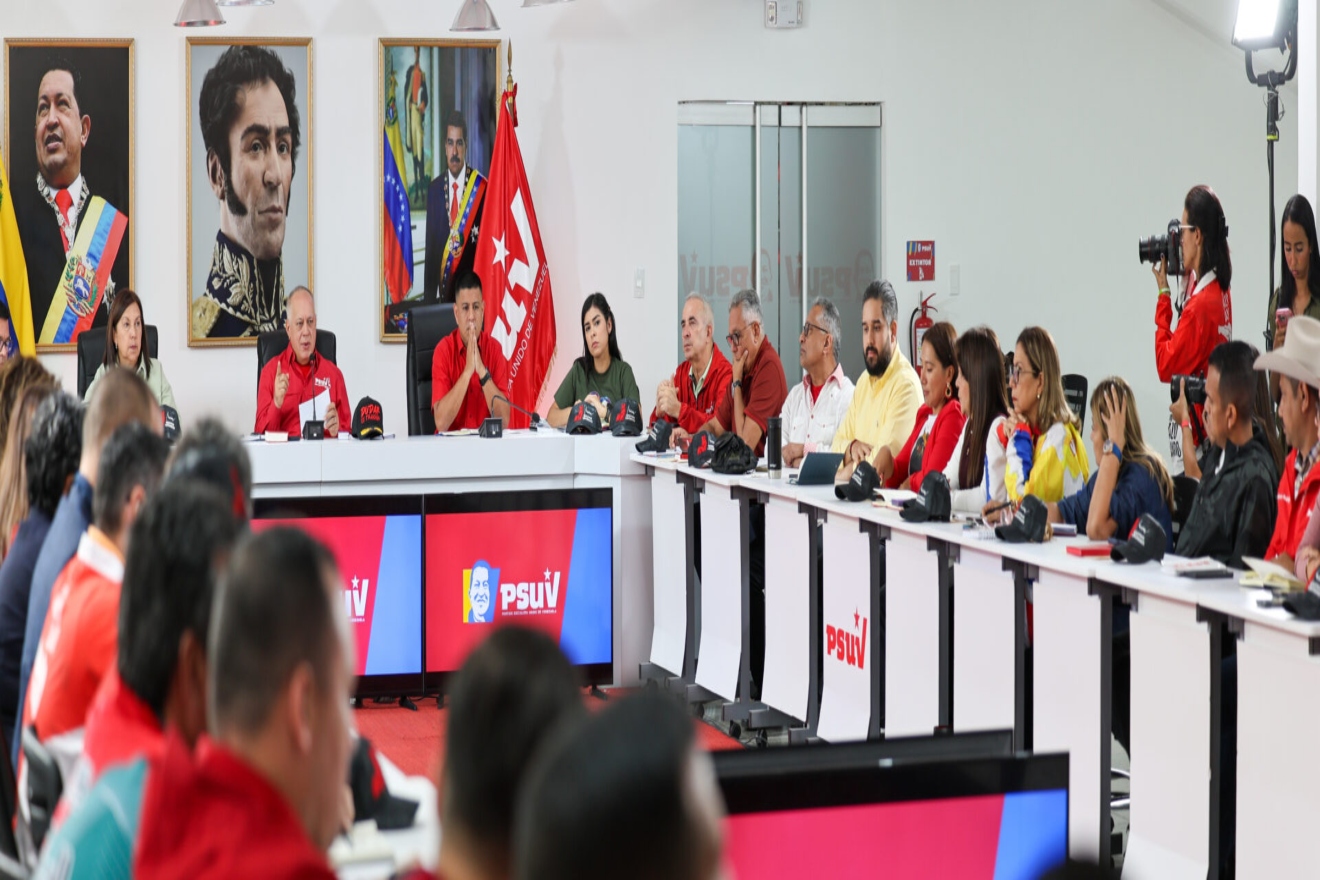
On January 23 in Caracas, the ruling United Socialist Party of Venezuela (PSUV) has called for a large mobilization that both sides describe as a mass street event with multiple gathering points in the capital. Opposition-aligned coverage details concentration points at Plaza José Martí in Chacaíto, Torre La Previsora in Plaza Venezuela, the CANTV headquarters, and the Plaza Morelos–Bellas Artes axis, emphasizing that this will bring partial closures to major arteries such as Avenida Libertador, Avenida Urdaneta, Plaza Venezuela, Avenida Universidad, and Avenida Baralt, with Avenida Solano López as a secondary area and routes like Avenida Boyacá (Cota Mil), Autopista Gran Cacique Guaicaipuro, and Avenida Río de Janeiro as alternatives. Government-aligned outlets similarly frame the day as a significant mobilization in Caracas convened by PSUV leadership and led publicly by Diosdado Cabello, who is identified as the party’s Secretary General, underscoring the expectation of a large turnout and coordinated activity across various sectors of the city.
Both camps agree that the January 23 date is tied to a historic anniversary, specifically the 68th commemoration of a pivotal political event in Venezuela’s modern history that has long been associated with popular mobilization. They also converge on the idea that PSUV is using the occasion to project organizational capacity and to connect party leadership with grassroots communities, with references to planned visits by party figures to neighborhoods to listen to residents’ concerns and provide assistance. Across the coverage, the mobilization is contextualized within the country’s broader institutional and partisan landscape, recognizing PSUV’s central role in the current government, the symbolic weight of street actions in Venezuelan political life, and the continuing use of commemorative dates as vehicles for both political messaging and public presence on the streets of Caracas.
Points of Contention
Nature and purpose of the march. Opposition-aligned outlets present the event primarily as a partisan PSUV march that will significantly affect urban mobility, stressing logistical information like closed avenues and alternate routes while downplaying any broader national mandate. Government-aligned coverage, by contrast, characterizes it as a popular, patriotic mobilization celebrating the historic January 23 anniversary and reaffirming the revolutionary process, portraying it as an expression of the people’s will rather than a narrow party event. The former frames the march as something citizens must work around, while the latter presents it as something citizens actively and enthusiastically join.
Political framing and messaging. Opposition sources treat the mobilization in largely neutral or technocratic terms, focusing on where and when people will gather and how traffic will be disrupted, and avoiding repetition of official slogans or ideological narratives. Government-aligned media heavily echo PSUV talking points, emphasizing mottos like “Unity, Struggle, Battle and Victory” and casting the march as a reaffirmation of loyalty to the Bolivarian project. Where the opposition press strips the event of ideological content in its framing, pro-government outlets embed it in a broader narrative of revolutionary continuity and mass support.
International dimension and Maduro narrative. Opposition coverage, as reflected in the sourcing, makes no mention of claims about Nicolás Maduro and Cilia Flores being “kidnapped by the United States,” and omits any international confrontation framing connected to the march. Government-aligned outlets, however, foreground Diosdado Cabello’s assertion that people will be mobilizing to demand their return and explicitly link the demonstration to resistance against U.S. actions, casting the streets as a stage for anti-imperialist protest. Thus, the opposition-oriented press keeps the event within a domestic, infrastructural frame, while government-aligned media situate it within a larger geopolitical struggle.
Role of state and party in communities. Opposition-aligned reporting depicts the mobilization’s impact on everyday life mainly through traffic management and urban planning, implicitly treating PSUV activity as one among many factors shaping public space. Government-aligned coverage, by contrast, highlights party leaders’ planned visits to communities as evidence of a caring, responsive leadership that listens to and helps residents, reinforcing the idea that PSUV structures are organically intertwined with social life. The former thus maintains a clearer separation between state-party actions and civic routines, while the latter promotes an image of the party as an essential, benevolent presence in neighborhoods.
In summary, Opposition coverage tends to portray the January 23 PSUV mobilization in Caracas as a partisan event with practical implications for traffic and public space and little emphasis on ideological messaging, while Government-aligned coverage tends to present it as a patriotic, mass popular uprising tied to anti-imperialist resistance, deep community engagement, and the broader revolutionary project.